Fine-Tune Domain Models Quickly to Unlock Custom AI Productivity
📌 Scenario Overview
Enterprises and research institutions often possess structured or unstructured domain-specific data, such as medical records, legal regulations, or financial reports. These datasets carry strong industry characteristics, where general-purpose LLMs may underperform. Leveraging CSGHub's model and data hosting capabilities, users can swiftly prepare training data and fine-tune open-source models to create tailored domain-specific LLMs.
- Target Users: Startups / Industry research institutes
- Goal: Train a business-aligned language model using industry corpora for tasks like Q&A systems, knowledge extraction, and document generation.
🧭 Step-by-Step Guide
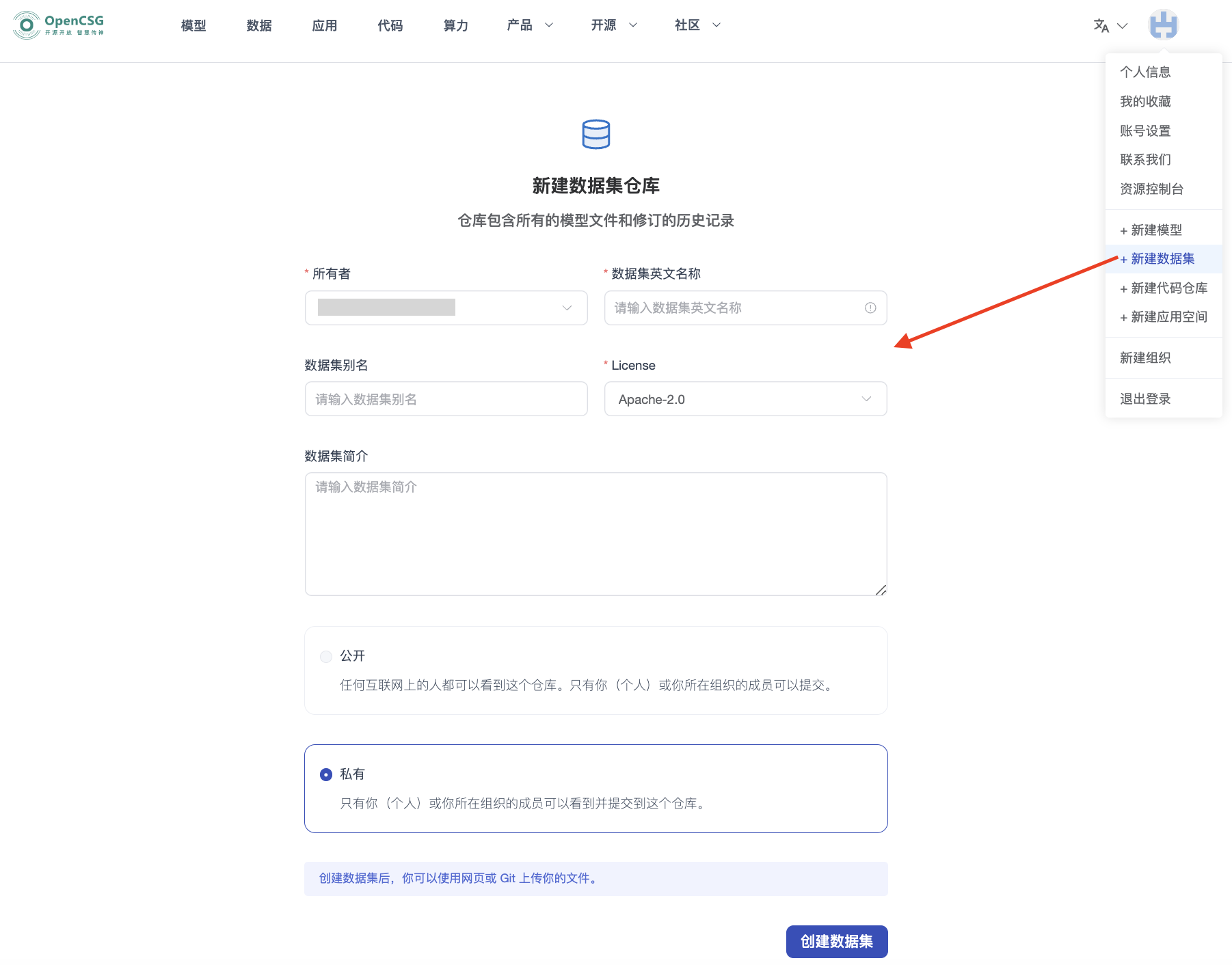
1. Create a Training Dataset
- Log in to your CSGHub deployment and create a new training dataset under your personal or team account.
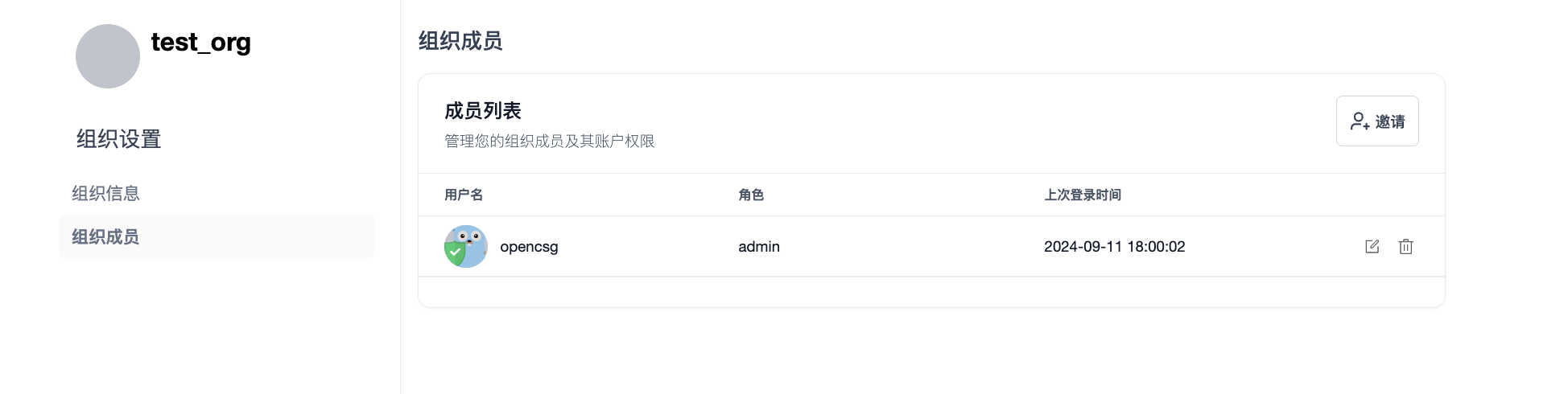
- For collaborative management, create an organization and invite members.
2. Upload Domain-Specific Data
- Upload training corpora in
.jsonl,.txt, or other common formats for supervised fine-tuning (SFT) or other tasks. Add descriptions and tags for easier management and reuse. - Multiple data upload methods are supported.
3. Select a Base Model
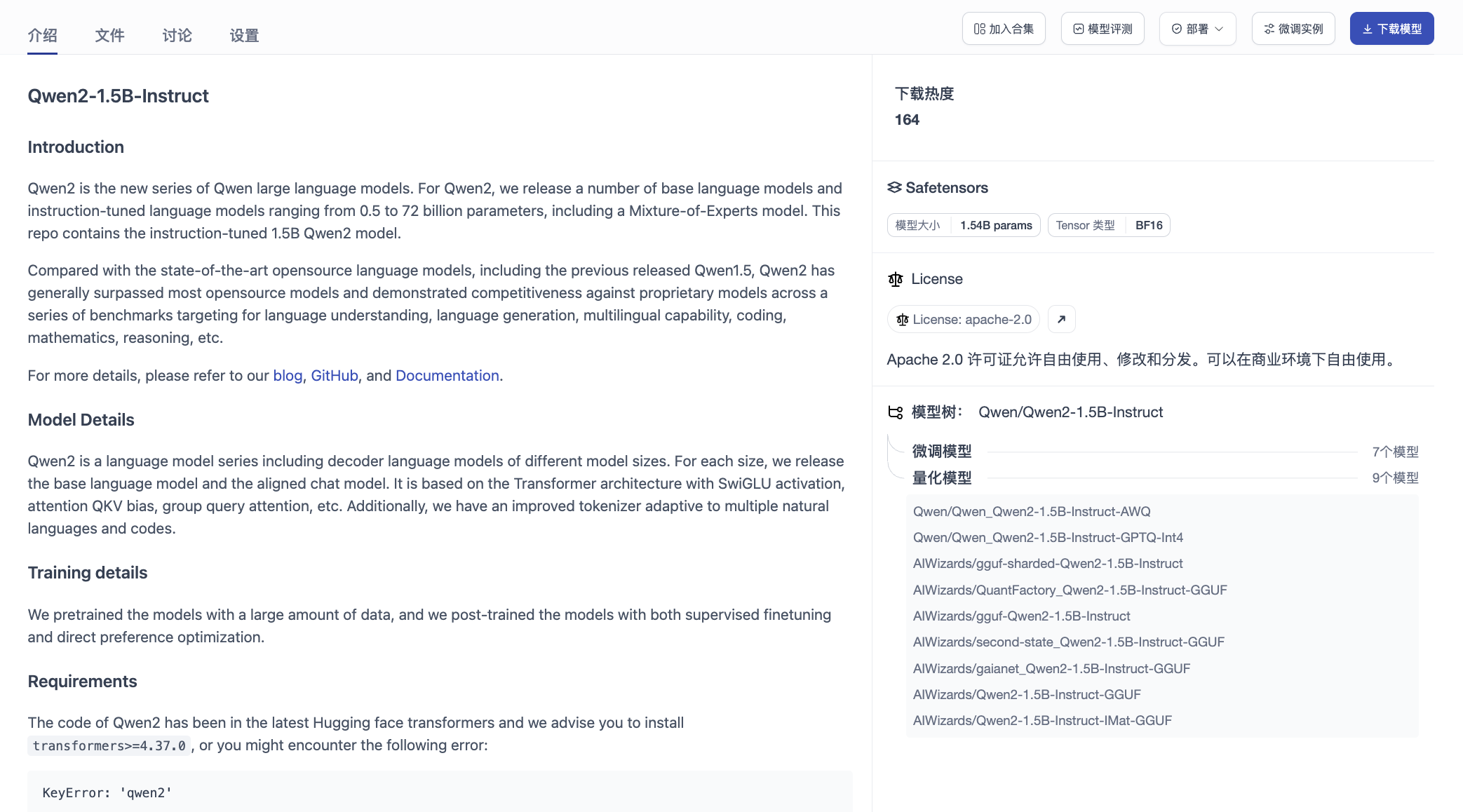
- Browse and select a suitable open-source base model (e.g., DeepSeek, Qwen, Baichuan, InternLM) from the model list. Check its details and license.
- Use the Model Tree feature on the model details page to review its lineage and derivatives for informed selection.
4. Launch a Fine-Tuning Task
- Create an instance with its name, compute resources and framework.
- Wait until ready, then open the framework UI, choose the dataset and training parameters, and start training.
- Verify logs and checkpoint output. A running instance does not mean a training job has started.
- Multiple fine-tuning frameworks are available. Refer to the Fine-Tuning Framework Guide for scenario-specific choices.
5. Publish New Model
- After finetuning, upload the model to your personal or organizational repository via CLI or Web UI. Release it as a new version with tags and documentation for traceability.
🌟 Key Outcomes
- Obtain a fine-tuned domain model with significantly improved comprehension of industry terminology and contexts.
- Deploy the model in private environments for applications like Q&A bots and document generation.
- Streamlined fine-tuning workflow accessible even to non-technical teams via Web UI.
- Clear version control with rollback/upgrade support for continuous optimization.